Bullet Journal Sticker Set Embroidery Review
I have spent years reviewing digital assets for my own boutique and advising other Etsy sellers on what actually translates well from a screen to a needle. When I first saw the Bullet Journal Sticker Set, my initial reaction was practical curiosity rather than excitement. In the world of machine embroidery, "cute" is easy to achieve, but "functional" and "stitchable" are rare qualities that determine whether a design becomes a bestseller or ends up in the trash bin after a failed test run.
This product falls under the Planner and Crafts categories, which immediately signals a specific audience: people who value organization, aesthetics, and personalization. However, as an experienced designer, I know that the charm of a sticker design often gets lost when converted into thread. The question isn't just if it looks good on paper; it is whether the Bullet Journal Sticker Set can hold its own against the tension of a sewing machine without losing its delicate personality.
First Impressions and Design Personality
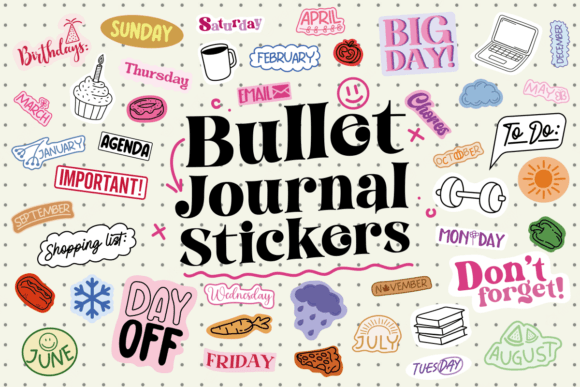
The visual language of the Bullet Journal Sticker Set is inherently playful and functional. It evokes the mood of a cozy morning planning session, filled with reminders, birthdays, and errands. From a design standpoint, this theme offers a unique challenge. Unlike a large floral motif or a bold logo, sticker designs usually rely on small details, varied shapes, and perhaps some text elements to convey their message.
When evaluating the layout, the design feels like it belongs in a space where detail matters. The concept of making special events "pop out" is clever, but in embroidery, popping out requires high contrast and clear stitch definition. If the original digital file relies too heavily on thin lines or tiny gradients, we risk those details getting swallowed by the fabric texture during stitching. For now, the vibe is undeniably friendly and approachable, perfect for the handmade market where customers are looking for something that feels curated and thoughtful.
Real-World Application: The Custom Tote Bag Scenario
To truly understand the potential of the Bullet Journal Sticker Set, I imagined applying it to a real project: a custom embroidered tote bag for a local craft fair. This is a classic use case for designers selling finished goods. The goal was to create a product that would appeal to busy professionals or students who need to organize their lives but want to do it in style.
Picture the finished product: a sturdy canvas tote featuring a cluster of the stickers arranged like a planner page. The design could serve as a daily reminder system stitched directly onto the bag. Imagine a satin-stitched calendar icon next to a running stitch checkmark list. This transforms a simple accessory into a functional tool. The Bullet Journal Sticker Set works exceptionally well here because the subject matter aligns perfectly with the utility of the item. A customer buying this wouldn't just be buying a bag; they would be buying a lifestyle statement.
However, the execution matters immensely. If the stitch density is too high, the canvas might pucker. If the colors chosen don't contrast enough with the beige or black canvas, the "pop" effect mentioned in the description will vanish. In this scenario, the design shines as a conversation starter, adding a layer of personality that mass-produced items simply cannot match.
Navigating Technical Challenges and Fabric Choices
While the concept is strong, any professional embroiderer knows that not all surfaces are created equal. There are specific scenarios where the Bullet Journal Sticker Set requires caution. For instance, attempting this design on a stretchy fabric like a standard t-shirt or a fitted sweatshirt demands a robust stabilizer strategy. If the hoop size is too small, the intricate details of the stickers might get distorted as the fabric stretches under the needle.
Texture is another critical factor. On a rough, textured fabric like denim or a thick wool sweater, tiny details from the set might disappear. Conversely, on a smooth, fine fabric like a baby onesie or a silk pillowcase, the design could look crisp, provided the thread count matches the fineness of the material. Dark fabrics present a different hurdle; unless you plan to use a high-density underlay or light-colored threads, the design may lack the necessary visibility to make those special events stand out.
Curved surfaces, such as baseball caps or aprons, add another layer of complexity. While the Bullet Journal Sticker Set might look great flat, wrapping those elements around a curved brim can distort the geometry of the stickers. I would advise testing this on a cap only if the design includes significant negative space to accommodate the curve. Similarly, products that require frequent washing, like kitchen towels or aprons, need to be evaluated for durability. Loose running stitches or very dense fill areas might snag or fray over time, affecting the longevity of the handmade product.
Impact on Brand Value and Customer Trust
In the competitive landscape of Etsy and small shop merchandise, the quality of your embroidery speaks volumes about your brand. A well-executed Bullet Journal Sticker Set project signals professionalism. It shows that you understand how to translate digital art into tactile reality. Customers are increasingly savvy; they can tell the difference between a design that was rushed and one that was carefully considered.
When the embroidery file performs well, it enhances the perceived value of the item. A personalized gift featuring these stickers becomes more meaningful because the craftsmanship reflects the care put into the design. This builds trust. Buyers are more likely to return to a shop that consistently delivers clean, sharp, and aesthetically pleasing work. Furthermore, for commercial embroidery projects, having a versatile design asset like this allows you to offer customization options, increasing engagement and sales potential.
Conversely, if the design fails due to poor stitch density or incorrect thread choices, it damages credibility. A blurry lettering element or a misaligned icon can make a boutique product look amateurish. Therefore, the decision to use the Bullet Journal Sticker Set should always be backed by rigorous testing.
Essential Designer Notes Before You Start
Before you load the Bullet Journal Sticker Set into your machine and start stitching your next custom apparel piece, there are several non-negotiable steps to ensure success. First and foremost, always test the design on scrap fabric that mimics your final product. This is the only way to verify how the thread colors interact with the specific fabric texture you are using.
Review the stitch density carefully. If the design includes small details, ensure they aren't so tight that the fabric puckers, nor so loose that the image looks sparse. Check the hoop size requirements; if the design is meant for a larger area but you are working in a small hoop, you may need to reposition or split the design. Inspect the small details and tiny lettering in a preview mode; if they are too small to be legible at 100%, they will certainly be invisible once stitched.
It is also wise to test the design in black and white mockups. Sometimes color distracts us from structural issues. Does the silhouette hold up? Is the balance correct? Additionally, confirm your licensing terms before selling finished items or digital products. Ensure you have the right to use the design assets for commercial purposes, especially if you are an Etsy seller or part of a craft business. Finally, use proper stabilizer. The choice of stabilizer can make or break the clarity of the applique design or the precision of the satin stitch areas.
The Bullet Journal Sticker Set has the potential to be a standout addition to any crafter's library. It bridges the gap between digital organization and physical creation. By approaching it with a critical eye and adhering to these practical guidelines, you can turn a simple collection of digital icons into a cherished personalized gift or a profitable line of small shop products. Just remember: the magic happens in the details, and those details must survive the journey from screen to stitch.